

 A not-very-well marbled round steak. I'd guess the USDA grade is Select.[/caption]
The top grade is USDA Prime, the overwhelming majority of which goes to restaurants--although some specialty butchers carry Prime. Next is Choice, which is the most common grade in all but discounted markets. Select is below Choice. I wouldn't get that for sirloin strip steaks or brisket, but Select filets and ribeyes are acceptable.
Below that are five more USDA grades, none of which you are likely to see in any meat market. The names alone tell you they aren't desirable: Standard, Commercial, Utility, Cutter and Canner. (I have long campaigned to have Standard renamed "USDA Okie-Dokey.") Beef that would grade below Select but headed for a retail meat counter is usually not graded at all. Such beef is known in the trade as "no-roll," a reference to the rolling, purple-ink marker that identifies USDA grading. I'll just say this: you probably eat more no-roll beef than any other grade. Especially if you shop for price.)
"Angus" is a breed of cattle, not a grade. It has no direct relationship to the USDA grading system, although Black Angus beef tends to grade higher than most other breeds. "Certified Angus Beef" and similar identifiers are trademarks used by a group of cattlemen to identify beef that meets the group's own standards, which are more stringent than the USDA standards. (Certified Angus Beef is, for example, from younger cows raised in the Midwest and Plains states.)
Here's a funny thing: there is no comparable grading system for pork or lamb.
A not-very-well marbled round steak. I'd guess the USDA grade is Select.[/caption]
The top grade is USDA Prime, the overwhelming majority of which goes to restaurants--although some specialty butchers carry Prime. Next is Choice, which is the most common grade in all but discounted markets. Select is below Choice. I wouldn't get that for sirloin strip steaks or brisket, but Select filets and ribeyes are acceptable.
Below that are five more USDA grades, none of which you are likely to see in any meat market. The names alone tell you they aren't desirable: Standard, Commercial, Utility, Cutter and Canner. (I have long campaigned to have Standard renamed "USDA Okie-Dokey.") Beef that would grade below Select but headed for a retail meat counter is usually not graded at all. Such beef is known in the trade as "no-roll," a reference to the rolling, purple-ink marker that identifies USDA grading. I'll just say this: you probably eat more no-roll beef than any other grade. Especially if you shop for price.)
"Angus" is a breed of cattle, not a grade. It has no direct relationship to the USDA grading system, although Black Angus beef tends to grade higher than most other breeds. "Certified Angus Beef" and similar identifiers are trademarks used by a group of cattlemen to identify beef that meets the group's own standards, which are more stringent than the USDA standards. (Certified Angus Beef is, for example, from younger cows raised in the Midwest and Plains states.)
Here's a funny thing: there is no comparable grading system for pork or lamb. Beef Grades
June 25, 2014
Q: What's the difference among the USDA grades of beef? Which is better, Choice or Select? Where does Angus beef fit into this scheme?
A: The United States Department of Agriculture grades beef according to an eight-grade system. It is not required by law; the packing house decides whether to grade it beef or not. The grade is on the entire carcass, not on just the big primal cuts the supermarket butchers handle. The main criterion is how much fat occurs in the lean parts of the beef, a quality that shows up as fat "marbling" in the lean. The more fat, the better.
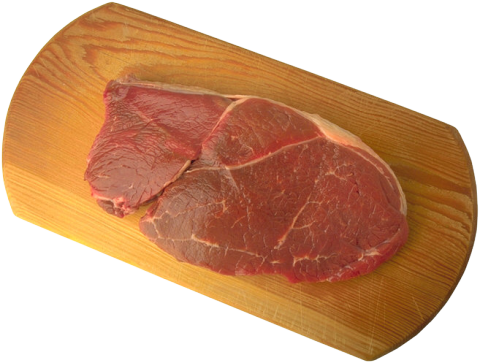
[caption id="attachment_42773" align="alignnone" width="480"] A not-very-well marbled round steak. I'd guess the USDA grade is Select.[/caption]
The top grade is USDA Prime, the overwhelming majority of which goes to restaurants--although some specialty butchers carry Prime. Next is Choice, which is the most common grade in all but discounted markets. Select is below Choice. I wouldn't get that for sirloin strip steaks or brisket, but Select filets and ribeyes are acceptable.
Below that are five more USDA grades, none of which you are likely to see in any meat market. The names alone tell you they aren't desirable: Standard, Commercial, Utility, Cutter and Canner. (I have long campaigned to have Standard renamed "USDA Okie-Dokey.") Beef that would grade below Select but headed for a retail meat counter is usually not graded at all. Such beef is known in the trade as "no-roll," a reference to the rolling, purple-ink marker that identifies USDA grading. I'll just say this: you probably eat more no-roll beef than any other grade. Especially if you shop for price.)
"Angus" is a breed of cattle, not a grade. It has no direct relationship to the USDA grading system, although Black Angus beef tends to grade higher than most other breeds. "Certified Angus Beef" and similar identifiers are trademarks used by a group of cattlemen to identify beef that meets the group's own standards, which are more stringent than the USDA standards. (Certified Angus Beef is, for example, from younger cows raised in the Midwest and Plains states.)
Here's a funny thing: there is no comparable grading system for pork or lamb.
A not-very-well marbled round steak. I'd guess the USDA grade is Select.[/caption]
The top grade is USDA Prime, the overwhelming majority of which goes to restaurants--although some specialty butchers carry Prime. Next is Choice, which is the most common grade in all but discounted markets. Select is below Choice. I wouldn't get that for sirloin strip steaks or brisket, but Select filets and ribeyes are acceptable.
Below that are five more USDA grades, none of which you are likely to see in any meat market. The names alone tell you they aren't desirable: Standard, Commercial, Utility, Cutter and Canner. (I have long campaigned to have Standard renamed "USDA Okie-Dokey.") Beef that would grade below Select but headed for a retail meat counter is usually not graded at all. Such beef is known in the trade as "no-roll," a reference to the rolling, purple-ink marker that identifies USDA grading. I'll just say this: you probably eat more no-roll beef than any other grade. Especially if you shop for price.)
"Angus" is a breed of cattle, not a grade. It has no direct relationship to the USDA grading system, although Black Angus beef tends to grade higher than most other breeds. "Certified Angus Beef" and similar identifiers are trademarks used by a group of cattlemen to identify beef that meets the group's own standards, which are more stringent than the USDA standards. (Certified Angus Beef is, for example, from younger cows raised in the Midwest and Plains states.)
Here's a funny thing: there is no comparable grading system for pork or lamb. 2 Comments
Gray HumpJune 25, 2014
There is some controversy in the cattle industry over the term "Certified Angus Beef". As you mentioned, Angus is a breed of cattle, not a cut/type of meat. The overwhelming majority of angus are black in color. In the genetics world, black is a dominant trait. So you can have an angus bull being bred to another breed of cows, and end up with calves that are really only half angus, but end up being black in color. There are several other breeds where black is their primary color as well. Unfortunately the Angus breed association has set the standard that "Certified Angus Beef" must be from an animal that is more than 50% black in color. Not necessarily more than 50% angus in pedigree. The result? Many people eating "Certified Angus Beef" are not really eating a "pure" angus steak. And it may not be angus at all, but some other breed that is black in color. Bottom line, I shop for meat based on the grades you mentioned and pay no attention to the other certifications being thrown around in the advertising world.
Tom FitzmorrisJune 27, 2014
The Certified Angust Beef program is not without merit. Of particular interest to me is that they limit the herds they use to the northern two-thirds of the Midwest and Plains states. Cows raised in warm climates don't develop as much fat as those in cooler ones. Also, CAB requires that the animals are harvested at a younger age than average, which also makes a difference in tenderness and, I would say, flavor too. On the other hand, I've consistently found that CAB is less good than USDA Prime and hand-selected (by me) Choice. Tastefully yours, Tom Fitzmorris
Sign in to leave a comment.